


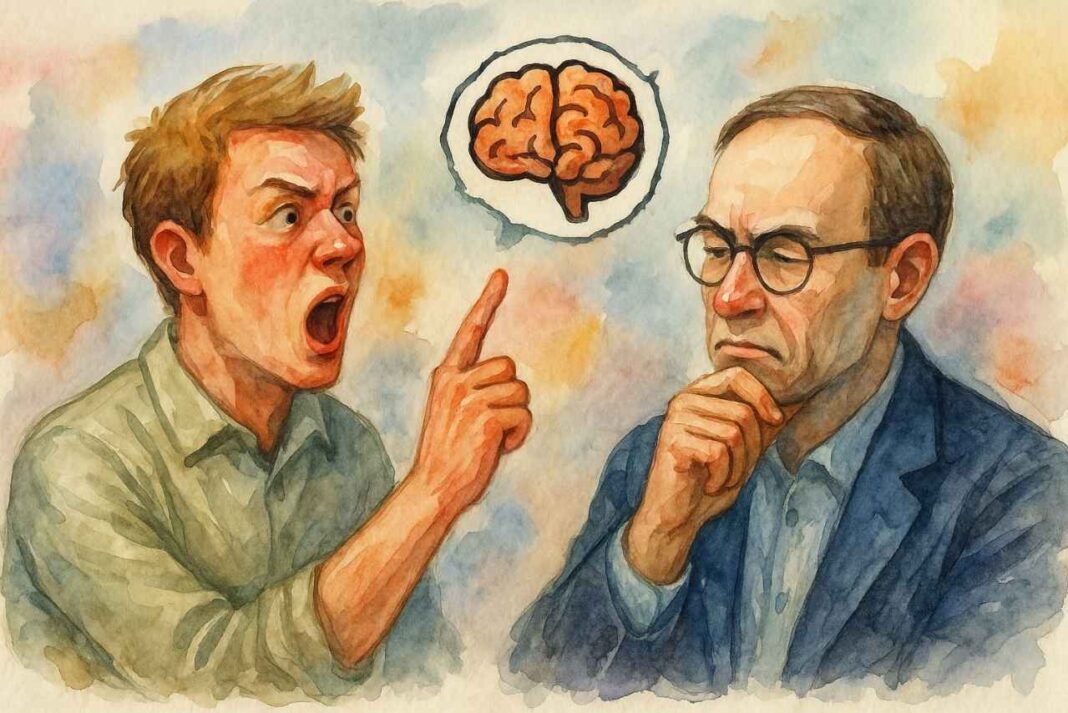

As we can easily observe on social media platforms or in various social groups today, most people have opinions on almost every subject. What’s worse is that they believe in their ideas and judgments, most of which are unfounded opinions. On the other hand, they sometimes perform these beliefs in a way that can even lead to verbal aggression online. So much so that even people who have devoted years to science and have signed various scientific studies can be criticized by people who have no scientific basis or studies on the subject. We, too, are watching these events with astonishment. Nevertheless, taking the right stance against such attitudes, that is, not engaging in polemics with people who fall into the know-it-all trap, is a good way to protect ourselves. Well, it is also possible for us to transform the anxiety we feel about this state of society into concrete solution keys.
In this article, we will conduct research on the tendency of people who do not have enough knowledge and experience in a field to see themselves as competent, and the tendency of experts to evaluate their own abilities lower. Throughout our study, we will keep the Dunning-Kruger effect—the boundaries of which were drawn by psychologists David Dunning and Justin Kruger—at the center. People who fall into the trap of knowingness sometimes make judgments about others based on the accumulation of experiences they have previously collected. They are so sure of themselves that they can also mislead their surroundings. Another form of this trap is to hold on tightly to information that is accepted by the majority, and when questioned, to go beyond scientific knowledge and wage a psychological war against those who present different evidence.
On the flip side, individuals who experience ideological rigidity can also exhibit exclusionary or isolating behaviors towards others who are included in their own teams but on whom they cannot impose their personal ideas. Interestingly, people who fall into the trap of knowingness or impose their own ideology also come from groups that advocate principles such as equality, sensitivity, and inclusiveness. Thus, with the passive or active aggressive, horizontal hierarchical attitudes of one or a few individuals, a state of fake inclusiveness and symbolic participation within the team comes into play. The Dunning-Kruger effect can also be defined as individuals or groups assuming that their own level of knowledge is higher than it actually is. This approach sheds light on the source of the divisions and disrespects frequently seen both among social media users and among political or volunteer groups.
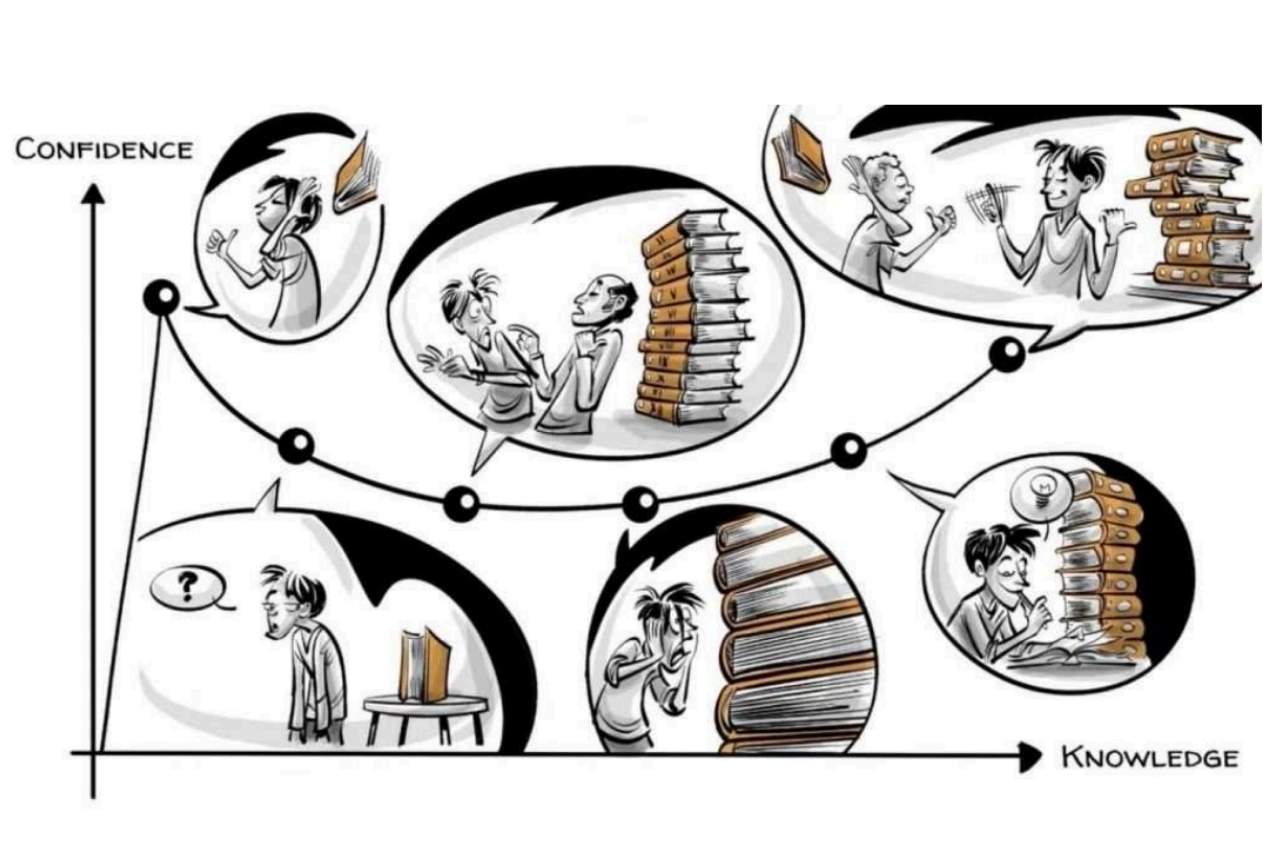
The Inverse Proportion of Knowledge and Self-Confidence in the Virtual Environment
According to research conducted at University College London, distilled information conveyed by experts creates cognitive dissonance in average users. Of course, when I say average user, I do not intend to create any hierarchy. However, there are of course cognitive and behavioral differences between those who have dedicated their lives to researching, understanding and taking responsibility for one or more issues and others. One of the aims of this article is not to widen this gap, but to reduce it as much as possible. Unfortunately, the basis of ignorance is not being aware of what one does not know. In other words—and indeed—“it is not shameful not to know, but to resist learning and change despite the accessibility of all media.”
Meanwhile, people who are possessed by ignorance perceive those who make an effort to share knowledge as a threat. Certainly, reactive people who exhibit irrational attitudes are not aware of themselves and the processes in question. However, various physical and chemical processes operate in the background of all defensive or aggressive attitudes. For example, users who give disparaging feedback to a researcher on social media about the research topic they have expressed with evidence have common internal dynamics. “Digital attackers” who have no purpose other than justifying their behavior give neurophysiological reactions such as amygdala hyperactivity. Behind the digital curtains, the amygdalas of people who act like keyboard pedants are twice as active as normal in the face of expert information.
In today’s modern and digital age, it is not easy to comprehend real threats. Most people perceive information that is an antidote to eliminate problems as a threat. In contrast, people who have found the keys to open locked doors approach issues as “we” when sharing information. Regardless of the intentions of the people sharing the information, “egocentric” people feel a status threat against them. As a result, no one’s house should be entered by force, even if the keys have been created. First of all, people who are caught in the drunkenness of ignorance need to be able to realize their memorizations, obsessions, defense mechanisms, and what they do not know. For this reason, instead of arguing with people who are caught in the trap of knowing, it is important for the health of the transmitters to convey information indirectly. We do not need new memorizations, but people who can question and have the courage to take responsibility.
The Illusion of Inadequacy and Superiority in Group Dynamics: So-called Common Goals, Political Hardening and the Dunning-Kruger Effect
Although the motto “Let’s learn together” sounds nice, it is generally a romantic expression that is far from reality. In fact, the number of self-aware people in social and political groups that are completely voluntary is usually low. Therefore, in communities where everyone is assumed to be equal, since their levels of consciousness are not equal, people caught in the trap of knowingness take away the freedom of expression of others. Of course, these behaviors are often not visible. The common purpose, which is the reason for coming together, is shaped around the psychological needs and deficiencies of individuals.
Individuals who have not made an intellectual and experience-based effort try to seize leadership positions with perception management and visibility strategies instead of rational contributions.
In the Dunning-Kruger effect, people are not aware of their deficiencies and see themselves as more competent than they are. On the other hand, these people, who are in a kind of mental intoxication, reflect their own projections on others instead of realizing their inadequacies. Thus, they try to neutralize intellectually and experientially competent people through various methods. As an example, they may try to discredit the person they have alienated by claiming that they are “political and scientific” and “the other is romantic and emotional”. Here, when the efforts made towards questioning and knowledge are disproportionate, people who have fallen into the trap of knowingness attack the personalities of others. In this way, they gather sides for themselves. With the trap, which is usually woven with a passive-aggressive attitude, the name of the competition within the group is not given, but its content gradually becomes political. After this, separations are created, and some members are marginalized with silent approvals. Common goals turn into a mask whose purpose is unknown.
Recognizing the Dunning-Kruger Trap and Encountering Ourselves
Every moment we run away from ourselves, the truth, and our responsibilities, we both increase our burden and build walls in front of “learning together.” If we can become aware of our automatic reactions instead of experiencing a “self-confidence explosion” in digital media or social and political volunteering areas, we can contribute to both ourselves and our environment. The critical thinking area (prefrontal cortex) of those under the Dunning-Kruger effect is disabled for a while. However, as stress hormones such as cortisol are secreted, aggression increases. When these individuals or groups tend to punish one another, empathy neurons (insula) are disabled. As people interact with similar thinkers (echo chambers), false beliefs and distorted judgments are reinforced. This situation blocks all kinds of development and makes us forget the common purpose. Therefore, developing the ability to take responsibility for ourselves without creating an “other” should be our priority. In this way, real problems can be revealed and reasonable solutions come naturally.
Bibliography
-
Kruger, J., & Dunning, D. (1999). “Unskilled and Unaware of It: How Difficulties in Recognizing One’s Own Incompetence Lead to Inflated Self-Assessments.” Journal of Personality and Social Psychology
-
Fleming, S. M., & Dolan, R. J. (2012). “The neural basis of metacognitive ability.” Philosophical Transactions of the Royal Society B.
-
Journal of Cyberpsychology (2023)