


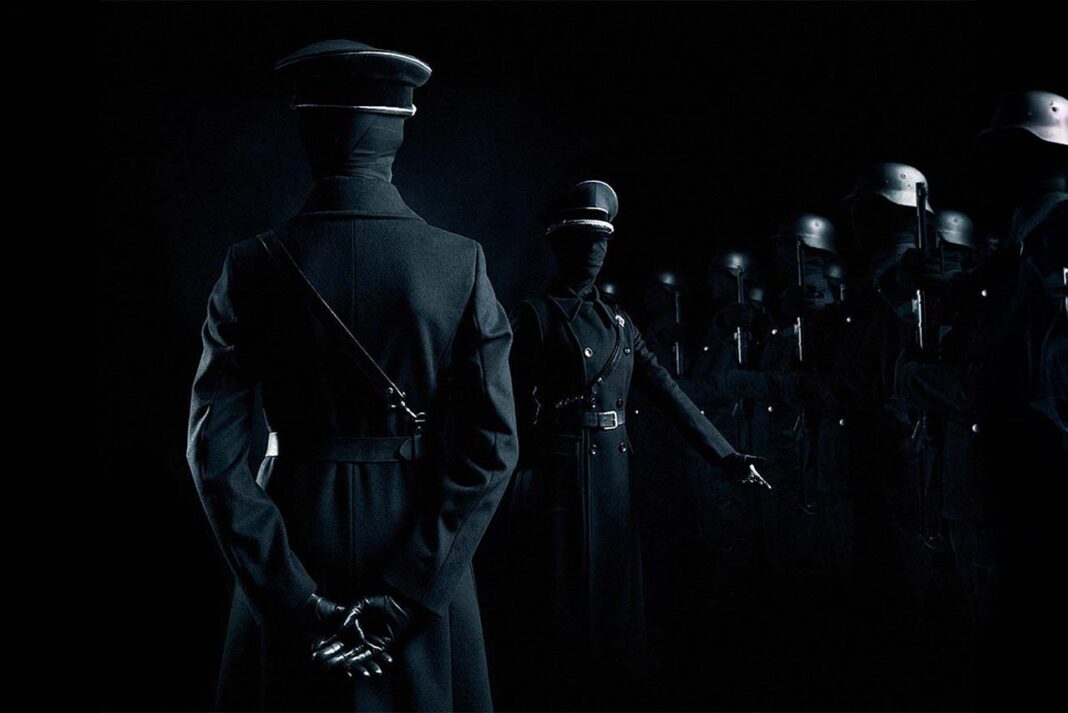

What exhausts a knight is often not the battle itself, but the armor he is forced to carry at all times.
Harsh training processes implemented in military and intelligence institutions are designed to prepare personnel for operational environments characterized by high stress, uncertainty, threat perception, and risk of death. The primary objective of these trainings is to increase individuals’ Psychological Resilience, ensure they can maintain functionality under stress, and enable them to make correct decisions during critical moments. In this context, these trainings aim to create a form of “psychological armor” within personnel.
The formation of this psychological armor generally occurs through the following mechanisms:
-
Emotional suppression: Consciously pushing emotions such as fear, helplessness, and sadness into the background,
-
Cognitive control: Encouraging task-oriented thinking rather than emotion-oriented thinking,
-
Desensitization: Reducing reactions to stimuli such as violence, death, and threat while maintaining composure.
For this purpose, institutions generally use the “Stress Inoculation Training” (SIT) approach. The aim is to apply SIT correctly, increase stress tolerance, and potentially reduce the development of Post-Traumatic Stress Disorder (PTSD) symptoms.
For example, courses such as SERE (Survival, Evasion, Resistance, and Escape) provide participants with realistic, challenging, and controlled stress environments. These trainings include elements such as simulated captivity, isolation, severe physical demands, and even torture-like components, and therefore may create significant acute stress responses in participants.
When training outcomes are examined, trauma-like psychological functional impairments, increased anxiety, deterioration in sensory perception, and PTSD-like symptoms have been measured among participants in such trainings; however, most cases tend to return to baseline levels after training ends. In fact, some studies have reported decreased PTSD and depression symptoms and improvements in functionality during and after exposure.
Of course, publicly available studies and limited academic data on this subject should be approached with skepticism, because such information may have been deliberately served incompletely or inaccurately in order to mislead enemy intelligence/forces or to divert the attention of organizations such as the United Nations, human rights non-governmental organizations, etc., or to maintain confidentiality.
When other studies on the subject are examined, training components such as sleep deprivation, chronic threat perception, humiliation, intense physical activity, continuous performance pressure, and the feeling of loss of control excessively stimulate the brain’s stress regulation systems.
Research shows that personnel exposed to such training experience disruption in cortisol regulation, increased amygdala activity, and suppression of the prefrontal cortex. This biological profile forms the fundamental neurological basis of PTSD.
Naturally, the desired psychological and physiological resilience levels and performance standards expected by these institutions must be significantly high. Proper implementation of such challenging training is vital both to achieve this and to ensure proper selection (choosing the right individuals suitable for the job). However, the focus here is to remind the risk factors associated with these heavy training processes and to provide perspective and critical thinking for institutions and individuals.
To make the situation clearer, let us consider an example:
The goal of an Olympic weightlifter is to lift the maximum weight on the platform during competition. To achieve this, they undoubtedly need to train regularly and often with heavy weights. However, while the intensity of the training process may improve performance, an injury during this period may suspend or prolong preparation for competition, or may cause serious declines in competition performance or even career trajectory.
Going further back, excessively strict standards in Olympic athlete selection may cause potential champions or athletes with high performance potential to be eliminated faster than they should be. It may also hinder the development and progression of those already within the competition system.
Reducing such outcomes merely to lack of effort or insufficient talent would be a superficial approach. Uncontrollable variables are abundant in every area of life. Applying a single-type training/selection method that relies solely on harshness does not ensure peak performance for every individual. On the contrary, due to temperament, experience, personality, and many other variables, it may result in eliminating the right person at the wrong time, breaking motivation in someone who could have achieved high-level performance and status, or even causing physiological injuries that may extinguish a rising star just before it shines.
The Psychological Cost Of Psychological Armor
Another perspective related to the subject is the cost of successfully completing such training. The ideal of strengthening, especially within military and intelligence institutions, becomes concrete through harsh training processes aimed at increasing Psychological Resilience.
In fact, Friedrich Nietzsche explained this situation quite well through a metaphorical expression:
“Strength also takes beauty away with it. Skin thick enough to resist fire is also insensitive to touch.”
In this context, the psychological armor developed may protect individuals against threat and pain while simultaneously dulling emotional sensitivity, empathy, and inner flexibility. Although the purpose of harsh training is to make personnel resilient against traumatic conditions, this constant “thickening” shaped under high stress may gradually prepare the ground for post-traumatic symptoms such as emotional numbing and internal disconnection.
Thus, strengthening may paradoxically result not only in resistance to external threats but also in desensitization toward human connection. The most visible reflection of this is often seen in sensitive but essential relationship dynamics such as family, partner, parenting, and friendships. It may damage relationship satisfaction and depth, and due to ongoing stress processes, may isolate the individual (divorces, separations, estrangements, etc.).
Among intelligence personnel (especially young single individuals), in addition to intense working hours and an uncertain lifestyle, the trust barrier is significantly higher and sharper. This may hinder their ability to establish, maintain, and deepen romantic relationships. Short-term or casual relationships may create security vulnerabilities, which may leave the individual alone in many areas even if they do not want to be.
Even this alone may prevent individuals from adequately benefiting from their fundamental support systems and may even cause psychological collapse if these supports are lost.
References
American Psychiatric Association. (2022). Diagnostic and statistical manual of mental disorders (5th ed., text rev.; DSM–5–TR). APA Publishing.
Charney, D. S. (2004). Psychobiological mechanisms of resilience and vulnerability: Implications for successful adaptation to extreme stress. American Journal of Psychiatry, 161(2), 195–216. https://doi.org/10.1176/appi.ajp.161.2.195
Foa, E. B., Hembree, E. A., & Rothbaum, B. O. (2007). Prolonged exposure therapy for PTSD: Emotional processing of traumatic experiences. Oxford University Press.
Hourani, L., et al. (2017). Effect of stress inoculation training with relaxation breathing on perceived stress and PTSD in the military. International Journal of Stress Management.
Jackson, S. (2019). Stress inoculation training outcomes among veterans with PTSD. PubMed.
Lieberman, H. R., Karl, J. P., McClung, J. P., Williams, K. W., & Cable, S. (2016). Improved mood state and absence of sex differences in response to the stress of Army Survival Training. Applied Psychology: Health and Well-Being, 8(3), 351–363. https://doi.org/10.1111/aphw.12077
Morgan, C. A., Doran, A., Steffian, G., Hazlett, G., & Southwick, S. M. (2006). Stress-induced deficits in working memory and visuoconstructive abilities in Special Operations soldiers. Biological Psychiatry, 60(7), 722–729. https://doi.org/10.1016/j.biopsych.2006.04.021
Morgan, C. A., et al. (2025). The impact of SERE training on selected neurotransmitter secretion in special forces soldiers. Scientific Reports.
Southwick, S. M., & Charney, D. S. (2012). Resilience: The science of mastering life’s greatest challenges. Cambridge University Press.
Van der Kolk, B. A. (2014). The body keeps the score: Brain, mind, and body in the healing of trauma. Viking.
Nietzsche, F. (1886/2002). Beyond Good and Evil (Turkish translation reference: İyinin ve Kötünün Ötesinde, trans. A. Yardımlı). İdea Publishing.