


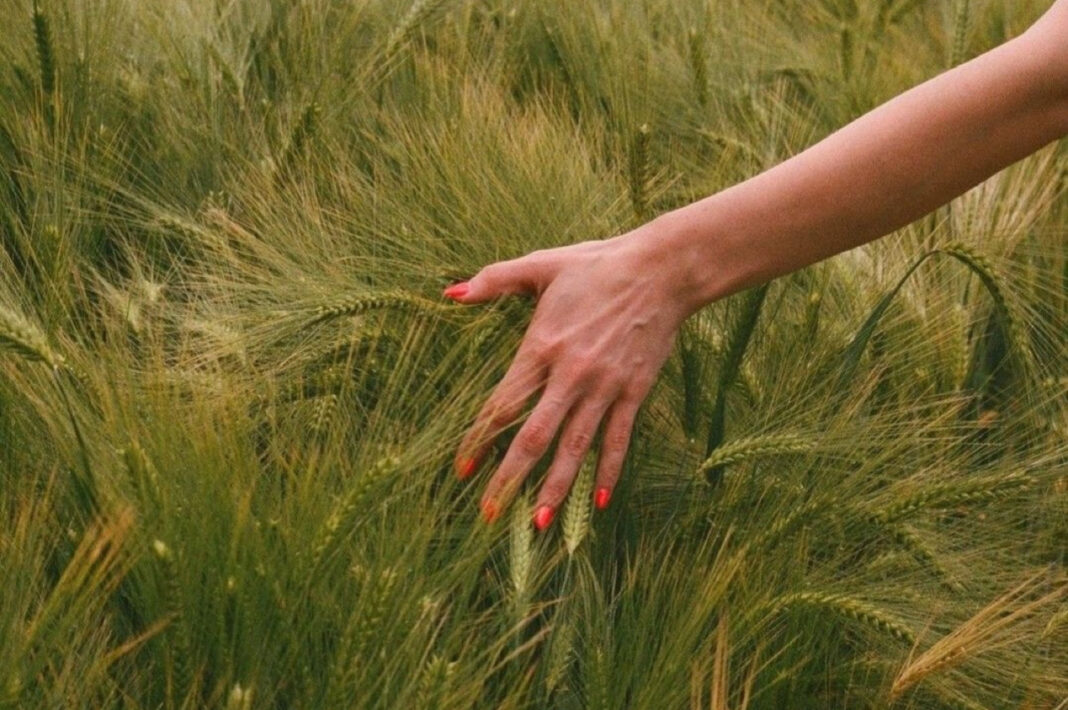

For thousands of years, human beings evolved as a part of nature; however, in the last few centuries, we have imprisoned ourselves within walls of concrete. With today’s digitalization, we leave ourselves to the exhaustion of blue lights and distance ourselves from the healing power of green. In reality, nature itself is the ancient medicine that benefits human mental and physical health.
So, how exactly does this “green medicine” work?
What Is Shinrin-Yoku (Forest Bathing)?
The name of this philosophy consists of two Japanese words: “Shinrin” (forest) and “Yoku” (bath). “Forest bathing” here does not mean literally washing inside a forest; instead, it means taking in all the elements of the forest (its atmosphere, trees, leaves…) with all five senses and washing the soul within nature. This philosophy considers itself an “art of being in the moment.” As many of us know, it is much more than a classic nature hike. It involves no effort to reach a destination, no goal of covering miles, and no concern for burning calories. It is the harmony of a person feeling their own body, their senses, and the forest together.
The Bathing Ritual
This “bath” has a ritual consisting of a few steps:
-
Digital Detox: The first step is to turn off or silence the phone that connects us to the digital world. No obstacle should come between nature and the human.
-
Connecting with Five Senses: In this step, a person establishes a real bond with nature by actively using all their senses.
-
Eyes: Observing the movement of light filtering through the leaves.
-
Ears: Listening to all the sounds within nature.
-
Nose: Inhaling the unique scent of the soil, plants, and the air after rain.
-
Touch: Feeling the roughness of a tree bark or the coolness of the wind on the skin.
-
Taste: Taking deep breaths as if tasting the freshness of the forest air.
-
Slowing Down: This step emphasizes that there is no room for rushing. The focus of the therapy is the intensity of the connection we build through our senses.
How Can Nature Be So Effective In Such A Short Time?
That fresh pine scent or the earthy smell after rain is actually a defense mechanism that trees release to protect themselves. Japanese scientists call these volatile oils “Phytoncides.” Trees release these chemicals to protect themselves from bacteria, fungi, and insects. However, when we breathe this air, a few miracles happen in our bodies:
-
Natural Killer (NK) Cells: These are the main defense mechanisms that fight cancerous cells and viruses. Research (Li, 2010) shows that the number and activity of NK cells in the blood of people who practice forest bathing increase significantly.
-
Stress Hormones: Cortisol is the hormone responsible for stress. A study (Park et al., 2010) proved that just a two-hour forest bath significantly lowers cortisol levels and balances blood pressure.
-
Fight or Flight Mode: The sympathetic nervous system (fight or flight), which is constantly on alert in front of screens, gives way to the parasympathetic nervous system (rest and repair) thanks to the forest scent (Hansen, Jones, & Tocchini, 2017).
This means that trees are not just living beings that produce oxygen; they heal the human body and soul with the invisible molecules they release.
What Should Modern Humans Without Daily Access To A Forest Do?
Actually, Shinrin-yoku is a state of mind rather than a specific place. If you cannot go to the forest, you can bring the forest to your living space. The plants you grow at home are not just decorative items; they are therapy tools that clean the air and regulate your nervous system. Furthermore, even having a window that looks out onto nature has a great impact on mental health. Research (Ulrich, 1984) shows that patients with a view of nature have shorter hospital stays and a decreased need for painkillers. Besides bringing green into your home, you can spend your breaks at work or school in urban parks. While doing this, simply silencing your phone and focusing on the moment will do wonders for your soul.
Returning To Ourselves Through Nature
In conclusion, nature is the biological and spiritual home of humanity. The modern human body, trapped within concrete walls, moves away from its own essence as it distances itself from this home. This is why the Shinrin-yoku philosophy is so important. Through it, we realize that humans are not just in nature; humans are nature itself.
When your soul is tired, when you feel overwhelmed, or when your mind is clouded, do yourself a favor. Go to the nearest green space, feel the earth beneath your feet, and just breathe. Think of nothing but what you feel with your five senses in that moment. Just stay in the “now.” Remember, healing always begins by returning to your roots.
References
Li, Q. (2010). Effect of forest bathing trips on human immune function. Environmental Health and Preventive Medicine, 15(1), 9–17. https://doi.org/10.1007/s12199-008-0068-3
Park, B. J., Tsunetsugu, Y., Kasetani, T., Kagawa, T., & Miyazaki, Y. (2010). The physiological effects of shinrin-yoku (taking in the forest atmosphere or forest bathing): Evidence from field experiments in 24 forests across Japan. Environmental Health and Preventive Medicine, 15(1), 18–26. https://doi.org/10.1007/s12199-009-0086-9
Hansen, M. M., Jones, R., & Tocchini, K. (2017). Shinrin-Yoku (forest bathing) and nature therapy: A state-of-the-art review. International Journal of Environmental Research and Public Health, 14(8), 851. https://doi.org/10.3390/ijerph14080851
Ulrich, R. S. (1984). View through a window may influence recovery from surgery. Science, 224(4647), 420–421. https://doi.org/10.1126/science.6143402