


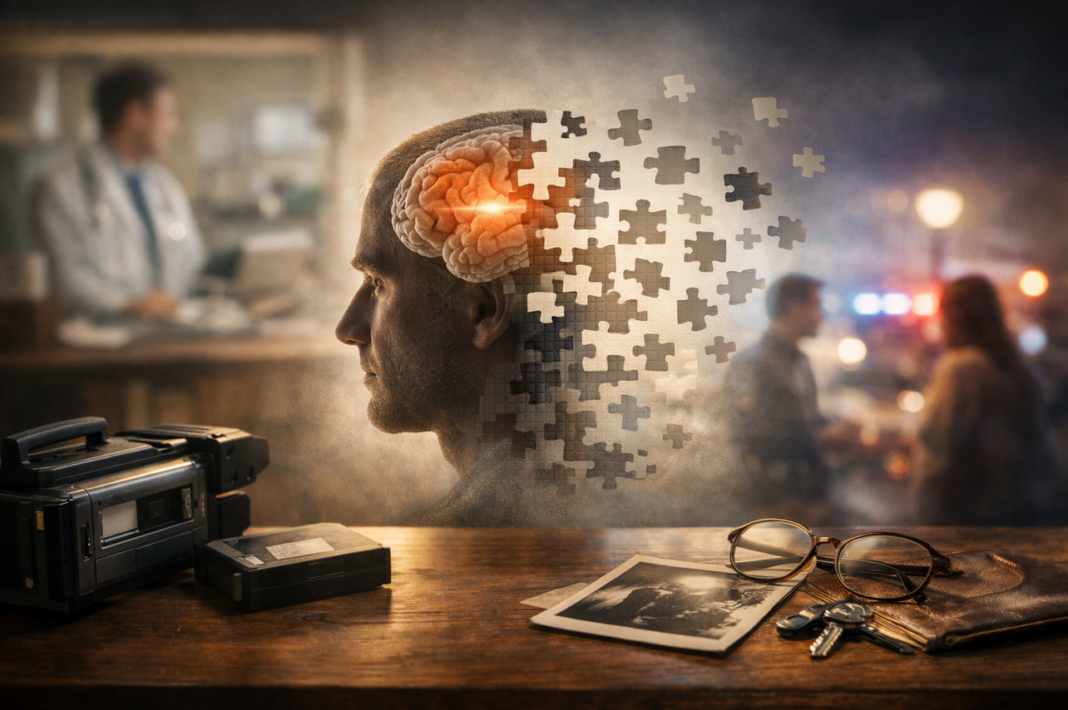

One of the most common and perhaps most persistent misconceptions about human memory is the belief that it works like a video recording device. We tend to imagine that our minds can simply “rewind” to the past and replay events exactly as they happened: chronological, clear, and complete. Yet modern cognitive psychology and neuroscience have long shown that memory is nothing like an archive. It is not a passive storage system, but a dynamic, selective, and above all constructive process. The brain does not preserve the past as it is but it reconstructs it each time it is recalled. For this reason, remembering is often less about “retrieving” and more about “building.”
An important explanation for why memory is fragmented and incomplete lies in the brain’s principle of cognitive economy. Throughout the day, countless stimuli reach our senses: images, sounds, smells, bodily sensations, and thoughts. Recording this entire stream of information would be costly. As a result, attention functions like a filter, selecting only what appears meaningful at that moment such as information related to our goals, emotionally salient details, potential threats, or socially relevant cues. When you enter a room, you usually encode its general layout, atmosphere, or whatever you are searching for (perhaps your keys), while subtle details like the pattern of the carpet or the faint background hum are often filtered out. In other words, memory is incomplete from the very beginning, already at the encoding stage.
How Real Are Our Memories?
What is fascinating is this, during retrieval, our minds do not alert us by saying, “There is a gap here.” On the contrary, we experience slightly fragmented and incomplete records as if they were smooth, continuous films. This feeling of fluency reflects not how reliable memory is, but how effectively the brain’s gap-filling mechanisms operate. Consciousness prefers coherence, and the brain tends to construct a consistent narrative rather than leave missing pieces exposed. One of the most intriguing of these mechanisms is known as pattern completion. The hippocampus, in particular, is thought to function like a completion engine that moves from parts to wholes. When a memory is encoded, it is not stored in a single location. Visual details are represented in one network, auditory traces in another, emotional components in yet another. During recall, activating only a small part of this network, the scent of a familiar perfume, the first few notes of a song, the corner of a photograph, can sometimes reactivate the entire memory.
However, this same mechanism is also vulnerable to error. If the cue is weak, misleading, or presented in a different context, the brain will still attempt to complete the pattern. Here, the boundary between memory and imagination becomes thin. While filling in gaps, the mind relies on the most plausible information available yet plausibility does not always equal accuracy. This is why details we believe we experienced may never have occurred, even though they feel entirely real. Moreover, every act of remembering is also an act of rewriting. Our current mood, beliefs, and even the people we have recently spoken to can subtly shape the tone and details of a memory.
One of the strongest tools the brain uses to fill gaps is schemas. Schemas are generalized knowledge structures built from accumulated life experiences, mental shortcuts that help us quickly make sense of the world. For example, a typical “doctor’s office” schema might include a waiting room, a receptionist, a stethoscope, a prescription, and a brief examination routine. When recalling an appointment from years ago, your brain does not carefully verify whether you actually saw a stethoscope that day. If that element exists in your schema, it may be quietly inserted into the memory. This is how what we call false memories can emerge. This is not deliberate lying; it is a byproduct of the mind’s search for coherence. Rather than struggling with disconnected fragments, the brain prefers to generate a meaningful and fluent story.
Predictive Processing: Memory’s Future-Oriented Function
Why, then, would evolution favor a system that appears so prone to error? Recent approaches in predictive processing offer an important perspective. The primary function of memory is not merely to store the past, but to anticipate the future. We retain past experiences so that we can more quickly predict what might happen in similar situations and respond appropriately. From this perspective, filling in missing information is not a flaw but a central feature of the system. The future is uncertain, and the brain continuously generates predictions in order to reduce that uncertainty. Completing incomplete data with the most likely scenario is far more efficient than gathering information from scratch each time. This flexibility also underlies abilities such as planning, scenario building, and creative problem solving.
Considering the everyday implications of memory errors is revealing. When two people recount the same event differently, we often assume that one of them must be lying. Yet in many cases, both individuals are sharing the most coherent version their own minds have constructed. In eyewitness situations, whatever captured attention becomes the central element of memory. The remaining gaps are filled with schemas, expectations, and information acquired later. Importantly, high confidence does not necessarily mean high accuracy. Feeling certain about a detail may simply reflect the fact that the brain has reconstructed it repeatedly.
In conclusion, human memory is not a flawless archive, but a living system that constantly evolves and adapts to context. Drawing from fragmented representations, cues, and schemas, it strives to offer us the most meaningful version of reality it can. Yes, we sometimes misremember. Yes, certain details may not be as precise as we believe, we may even remember events that never happened. But this fallibility is not a weakness of our cognitive system; it is the cost of its flexibility and adaptability. Accepting the reconstructive nature of memory allows us to develop a healthier skepticism toward both our own recollections and the testimonies of others. And perhaps most importantly, even in moments when we say, “I remember clearly” or “I am absolutely sure,” it reminds us that our minds may quietly be composing a story. And perhaps that is precisely why, even when it falters, memory remains one of our most human qualities.