


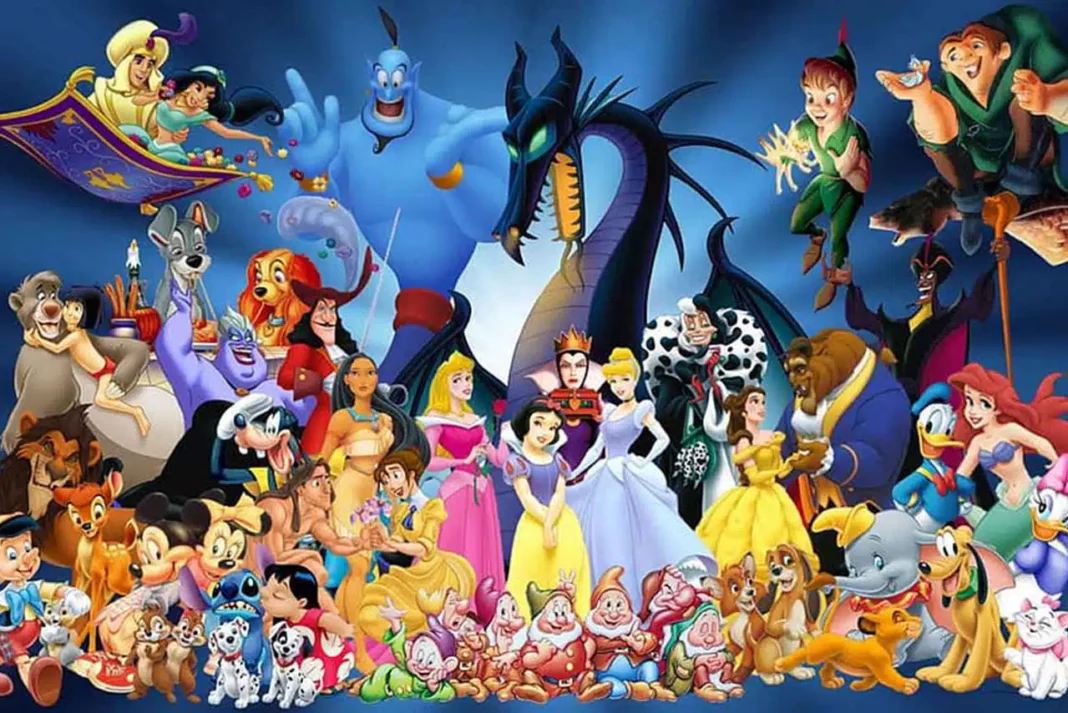

There are certain moments we watch with enchanted eyes on the cinema screen or television: the instant Cinderella slips her glass slipper back on, the scene in Beauty and the Beast where Belle transforms a darkened heart through her love of books, or that magical moment in Frozen when Elsa turns her loneliness into freedom. These scenes are not merely fairy tales; they are emotional imprints that touch our hearts. Disney films offer far more than a colorful world of imagination—they are modern fairy tales that shape our first stories about love, trust, and connection. These stories often carve themselves into our hearts without our awareness; and as we grow up, we hear their quiet echoes in our own relationships.
Attachment Theory And Early Emotional Learning
Attachment theory, first proposed by John Bowlby (1969), suggests that a child’s early bond with a caregiver forms the foundation for lifelong patterns of love and trust. Building on this framework, Mary Ainsworth (1978) identified secure, anxious, and avoidant attachment styles, shedding light on how individuals perceive and experience closeness. Within this theoretical context, Disney films can be seen not merely as entertainment, but as emotional learning tools that help shape children’s inner worlds through Attachment Theory, Fairy Tales, and Emotional Development.
The Disney universe not only introduces children to how the world works and what relationships look like but also portrays diverse forms of love. These films idealize romantic love as a “redemptive power,” while also celebrating friendship, courage, and solidarity. Thus, Disney narratives carry both emotional risks and resources.
Romantic Ideals And Insecure Attachment
From a critical perspective, early Disney films often define love through the lens of “completion.” Characters reach love by undergoing a passive process of rescue. Such portrayals may nurture tendencies in young girls to “wait to be saved” or to “center their identity around a relationship.” This pattern aligns with what Bowlby (1969) described as anxious attachment—where one’s sense of worth depends on the partner’s attention.
Ariel’s story in The Little Mermaid (1989) exemplifies this dynamic: she sacrifices her voice for love, symbolically giving up her identity for emotional closeness. Similarly, Elsa’s suppression of her emotions in Frozen (2013) reflects an avoidant attachment style—she fears intimacy because closeness feels like a loss of control.
Relational Growth And Secure Bonds
Yet the Disney universe is far from one-dimensional. Many films also explore themes that form the foundation of secure attachment—friendship, trust, and unconditional love. These narratives teach that love is not solely romantic; it also includes support, loyalty, and mutual care. According to Gilligan (1982), women’s emotional development is characterized by relationality—the idea that self-worth is shaped through connection.
Disney films, in this sense, teach young viewers not only about romantic love, but also about relational solidarity. Anna’s self-sacrifice to save Elsa represents a non-romantic yet profound example of “true love.”
Therefore, it would be misleading to evaluate Disney films in a single dimension. On one hand, they reinforce the “happily ever after” ideal, fostering unrealistic expectations in relationships. On the other, they make visible the multifaceted nature of love, thereby contributing to emotional development. In recent years, films such as Moana (2016), Encanto (2021), and Frozen II (2019) have introduced more modern narratives of secure attachment by emphasizing identity, family bonds, and self-acceptance.
Love Beyond The Fairy Tale
Real life, however, is not as simple as a fairy tale. Love is not a miracle or a rescue—it is a process in which two people recognize each other’s vulnerabilities, fears, and needs. Attachment theory reminds us that love blossoms not through “magical kisses,” but through emotional consistency and reliability. Forming healthy relationships in adulthood requires reinterpreting the fairy tales we internalized in childhood.
When viewed with critical awareness, Disney films can enhance emotional literacy and deepen our understanding of the many faces of love. True love is not someone saving us—it is the space we create together to grow.
References
-
Ainsworth, M. D. S. (1978). Patterns of attachment: A psychological study of the strange situation. Hillsdale, NJ: Erlbaum.
-
Bowlby, J. (1969). Attachment and loss: Vol. 1. Attachment. New York: Basic Books.
-
Gilligan, C. (1982). In a different voice: Psychological theory and women’s development. Cambridge, MA: Harvard University Press.