



The American Psychological Association (American Psychological Association [APA], 2013) defines Autism Spectrum Disorder (ASD) as a neurodevelopmental disorder characterized by persistent difficulties in social interaction and communication, along with restricted, repetitive, or nonfunctional patterns of behavior. ASD is a developmental disorder that typically emerges in early childhood (APA, 2013). Research indicates that approximately one in 166 children in the United States has been diagnosed with ASD (Chakrabarti & Fombonne, 2001).
Although the exact causes of autism have not yet been fully clarified, scientific studies suggest that genetic and environmental factors play a significant role in brain development. Infectious, immunological, genetic, neurological, and environmental factors are considered among the possible causes of autism (Johnson et al., 2007; Lai et al., 2014).
According to the DSM-5, the diagnosis of autism is based on four main criteria: (a) persistent deficits in social interaction and communication, (b) restricted and repetitive behaviors, interests, or activities, (c) symptoms present in early childhood and showing continuity, and (d) clinically significant impairment in daily functioning (Lobar, 2016). ASD is typically diagnosed around the age of three or four (Dombrowski, 2014). As a lifelong condition, ASD can have long-term effects on individuals’ social, academic, and occupational lives.
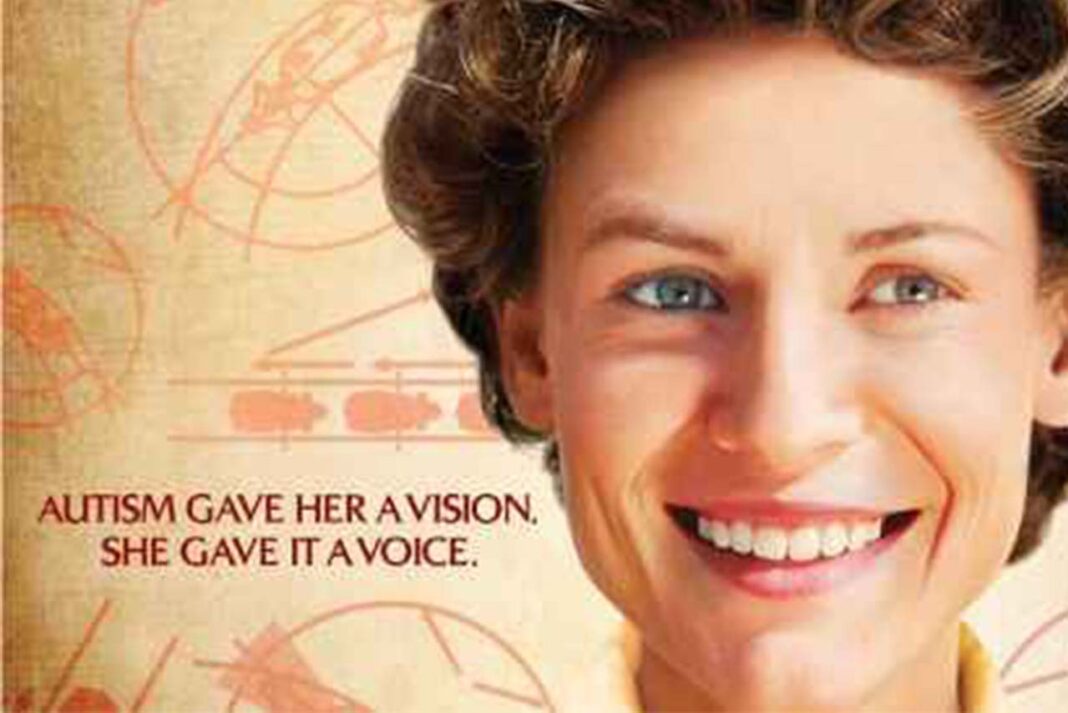
Autism is frequently portrayed in popular media, such as the film Temple Grandin. The film is based on the true life story of Temple Grandin, a woman diagnosed with autism. Despite her diagnosis, Temple Grandin achieved significant academic and professional success in the field of animal science. This study examines the relationship between the behavioral characteristics associated with autism and the film Temple Grandin, and critically evaluates the film in light of academic knowledge.
Evaluation Of The Film Temple Grandin In Terms Of Autism
At the beginning of the film, Temple explains that she organizes her thoughts in visual images and perceives the world from a “different perspective.” She is portrayed as having heightened auditory and visual sensitivity. According to Boroson (2016), approximately 90% of individuals on the autism spectrum perceive sensory input either excessively or insufficiently. As a result, stimuli such as intense noise, smells, or movement may be extremely distressing for these individuals.
Temple’s sensory overload in the cafeteria scene exemplifies the sensory sensitivities frequently observed in autism. However, her advanced visual perception becomes a cognitive advantage. Her ability to interpret the Ames room illusion differently and transform this insight into an academic presentation highlights the strengths associated with autism.
Compared to many individuals on the autism spectrum, Temple demonstrates relatively advanced communication skills. However, research shows that approximately one-third of individuals diagnosed with ASD do not sufficiently develop functional communication skills (Noens et al., 2006). Repetitive behaviors commonly observed in autism (e.g., rocking, hand-flapping, or repetitive vocalizations) are portrayed in a limited manner in the film (Boroson, 2016).
Difficulties in recognizing emotions and interpreting social cues are also emphasized in the film. Temple’s use of visual cards to learn facial expressions aligns with structured learning methods commonly used in autism interventions. Additionally, the film depicts Temple giving limited emotional responses in certain situations, which is consistent with emotional processing difficulties often seen in ASD.
Research indicates that individuals with autism may experience intense anxiety in response to new experiences and tend to adhere strongly to routines (Boroson, 2016). However, Temple’s willingness to work on different farms in the film reflects her high level of functioning and her adaptive skills, which develop with environmental support.
While the film Temple Grandin portrays the core characteristics of autism, it centers on an exceptional example and emphasizes the strengths associated with autism. Temple Grandin’s academic and professional achievements demonstrate the importance of appropriate environmental support and individual determination in developmental outcomes. The film presents a realistic yet selective representation of autism.