



We all know this scene: most of the time you feel like someone who makes very “rational” decisions. And then—suddenly… a message, a look, a tone of voice, a criticism. Something switches off inside you. Your heart speeds up, your throat tightens; you either fall silent, snap back, or pull away with a “I’m leaving.” Later, once you calm down, one sentence appears: “Why did I react like that?”
This article is about exactly those moments: the mind’s short-circuits—and why they are not “weakness,” but often the brain’s survival system taking over.
Our brain is not a single system. Very broadly, we can speak of two modes: thinking mode and survival mode. In thinking mode we plan, weigh outcomes, empathize, and consider options. In survival mode there is only one goal: reduce danger. When this mode turns on, logic is still “there,” but its microphone gets muted; the body and automatic reactions take the stage.
How Does The Short-Circuit Happen? (The Brain’s Fast Lane)
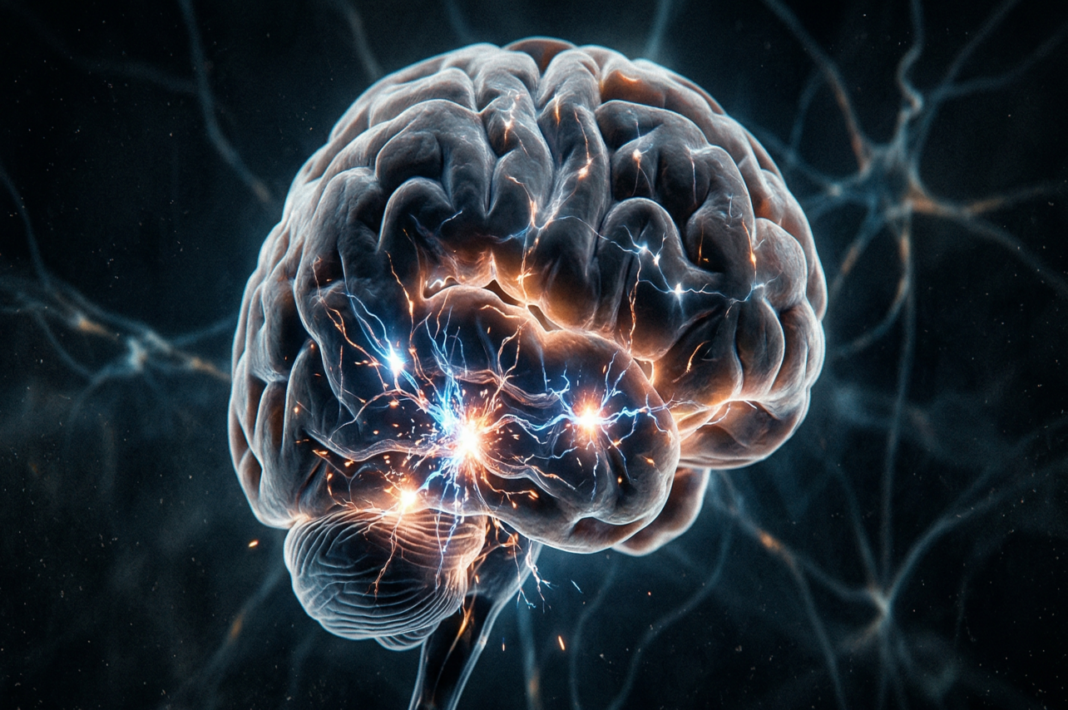
Perceived threat activates faster-processing networks in the brain. The amygdala, in particular, searches for an answer to “Is this safe?” in a fraction of a second. If there is a possibility of danger, the nervous system speeds up: heart rate rises, breathing becomes shallow, muscles tense. At the same time, the prefrontal cortex—the area responsible for “thinking and regulation”—may work less effectively. So your brain is not “irrational”; the priority order has simply changed. Safety first, meaning-making second.
These short-circuit moments usually show up in three responses:
-
Fight: hardening, arguing, getting defensive.
-
Flight: leaving the situation, cutting off, “shutting down.”
-
Freeze: going quiet, mind going blank, words not coming.
For some people there is also fawn/appease: quickly agreeing, soothing the other person, pulling yourself back. This, too, is a social survival response.
What Is A Trigger? A “Small Thing” That Opens A Big Door
Many people say, “It was actually such a small thing.” Yes—externally it may be small. But a trigger is a door that links a small event today with a large emotion from the past. A tone of voice may once have meant being criticized. Being ignored may once have meant being left alone. Someone pulling back may awaken an old sense of abandonment. That’s why the short-circuit is not about today’s event itself, but about the meaning today’s event touches.
Here is a critical point: the mind does not register “danger” only as physical. Social threats—being excluded, shamed, belittled, made to feel worthless—can activate the brain’s alarm system as strongly as physical threat. Because the human brain is built to survive through bond and belonging. When danger is perceived in a relationship, the short-circuit is triggered more easily.
Why Can’t Logic “Catch Up”?
When logic goes offline in short-circuit moments, it is usually not about personality; it is about narrowed cognitive capacity. Under stress, attention tunnels: the mind locks onto a single point (“They’re rejecting me right now”). Alternative explanations weaken. Time perception changes. One sentence can feel like it summarizes the entire relationship. That’s why options that seem reasonable “afterwards” may be invisible in the moment.
In those moments telling yourself “Calm down” often doesn’t work—because calm is not just a feeling, it is a regulated state. Without regulation, logic does not return. So first, the system needs to slow.
Catching The Short-Circuit Early: Warning Signs
A short-circuit often begins in the body. You may notice signs like:
-
clenching the jaw, lifting the shoulders
-
tightness in the chest, a knot in the stomach
-
words disappearing—or speaking quickly and sharply
-
the urge “I must leave now” or “I must prove myself now”
-
a sudden wave of shame or anger inside
Noticing these early is like catching a short-circuit before it fully burns out.
Getting Out Of The Short-Circuit: A Scientific But Everyday Roadmap
The goal is not “never being triggered,” but recovering faster once you are. A three-step map helps:
-
Slow the body. The quickest doorway is breath and muscles. Extending the exhale for two minutes (for example, inhale for 4, exhale for 6) sends the nervous system a “danger is decreasing” signal. Lowering the shoulders intentionally and softening the jaw can have a similar effect.
-
Re-label the meaning. Give yourself a one-sentence translation: “My brain thinks this is danger right now.” This moves the experience from a “personality flaw” to a system response. Then you can ask, “What does this resemble from the past?” The goal is not deep analysis; it’s seeing the link.
-
Make a micro-choice. Big conversations are risky in a short-circuit. A small choice is safer: “I’m not ready to talk right now; I’ll come back in 20 minutes,” or “I’m tense right now and I don’t want to say this the wrong way.” These micro-boundaries protect both the relationship and your nervous system.
Final Word
The mind’s short-circuit moments are not a defect; they are often the brain’s “protect me” reflex. The point is not to blame the reflex, but to recognize it and teach it a new path. Because logic does not truly disappear—it is simply waiting for its turn. When the nervous system slows, the inner voice becomes audible again. And then the question “Why did I react like that?” can be replaced with a gentler sentence:
“I was triggered. I’m learning how to recover.”