


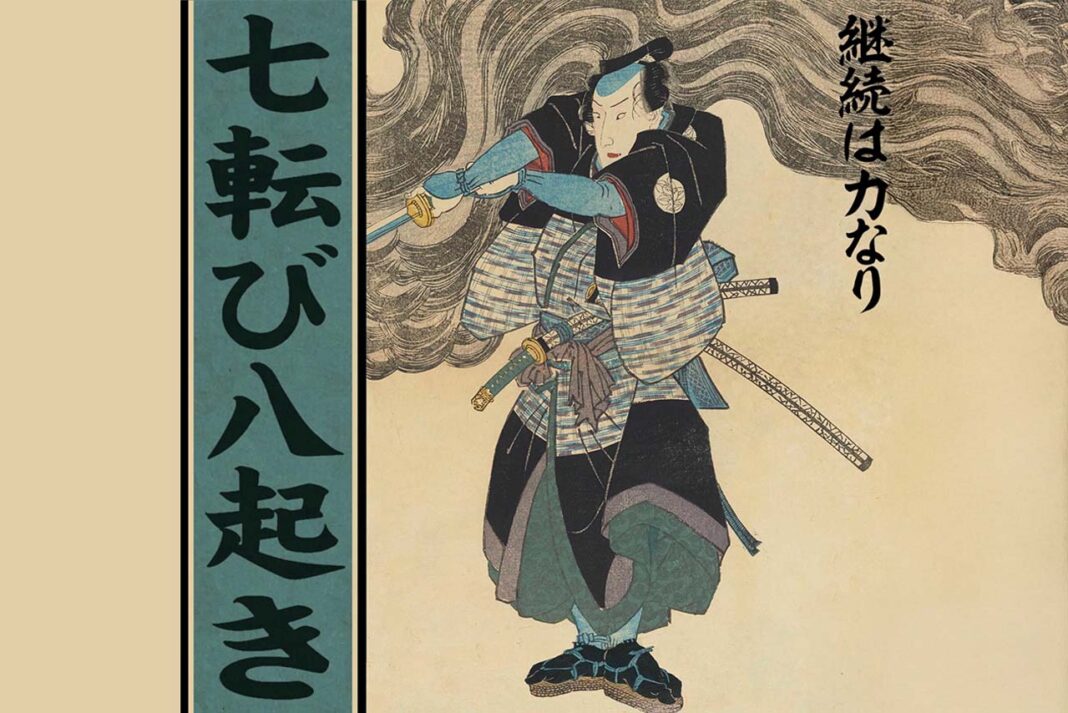

Failure… one of the most feared words in modern society. For many of us, it represents not only a personal fall, but also the shame of collapsing under the eyes of others. We are taught that failure is the end, and success is the only valid destination. Yet psychology tells us something else: failure is not the opposite of growth; it is a necessary part of it. The problem lies not in failure itself, but in the meaning we attach to it.
The Neuropsychology of Failure
The human brain works through systems of reward and punishment. Dopamine is tied to motivation and anticipation; cortisol rises with stress and disappointment. When we fail, dopamine drops and cortisol spikes. This is why failure is not just mental but physical: a racing heart, a stomach in knots, sleepless nights. The body feels the fall as much as the mind does.
The Cultural Myth: Failure = Worthlessness
Society often presents success as a straight ladder: you climb step by step, and one slip sends the whole structure crashing down. This makes people equate failure with personal worthlessness. Yet success is never universal; it is shaped by culture and history. What one place sees as failure, another may see as courage or learning.
Clinical Perspective: The Emotional Echo of Failure
In therapy, failure often fuses with self-concept. When something doesn’t work, people rarely say “my attempt failed”; instead, they say “I am a failure.” Psychology calls this internalization, reducing the self to a single event. It makes identity fragile and dependent on outcomes. The healthier stance is to separate behavior from identity: behaviors can fail, but the self is far more than a momentary setback.
The Cycle of Pessimism
The danger of failure is not the event itself, but the cycle of pessimism it can trigger:
-
“It didn’t work once; it never will.”
-
“Maybe I’m just not the kind of person who can do this.”
-
“Why try, when I’ll just fail again?”
Cognitive psychology calls this learned helplessness when people stop trying even though success is still possible. Failure then becomes not an event, but a lens that distorts every possibility.
Breaking the Cycle: Making Peace with Failure
How do we break this cycle?
-
Reframe meaning: See failure not as the end, but as feedback. Edison once said, “I have not failed. I’ve just found 10,000 ways that won’t work.”
-
Separate action from identity: “This attempt failed” is not the same as “I am a failure.”
-
Set micro-goals: Small steps reignite momentum.
-
Emotional regulation: Breathing, meditation, journaling tools that calm cortisol and bring clarity.
-
Social support: Research shows people with supportive networks recover faster from setbacks.
Lessons from Popular Culture: Falling and Rising Again
-
The Avengers were seen for years as the world’s strongest, most invincible heroes. Humanity believed they could never lose. But in Infinity War, Thanos’s overwhelming power shattered that image. Half the world disappeared, and the heroes themselves broke down. Steve Rogers sitting in a therapy group showed just how deeply the loss scarred them. The team scattered; many were gone, the rest sunk into despair. And yet, they did not quit. They reunited, tried again, and in Endgame they reclaimed victory. They reminded us that even the strongest can fall but true strength lies in standing up again.
-
Alexander Hamilton’s story is also woven with setbacks and rebirth. Born poor and illegitimate on a small Caribbean island, society had already written his destiny as failure. Yet Hamilton rewrote it. He arrived in America, built a life from nothing, and became George Washington’s closest aide. When Washington retired, Hamilton was left exposed, vulnerable to attacks, and nearly erased from politics. Yet he did not disappear. He forged his own path, laying the foundations of America’s financial system and becoming influential enough to sway the course of elections. His journey from poverty to prominence, from downfall to legacy shows that failure cannot erase what endures.
-
Daenerys Targaryen began her life as a powerless exile, a princess without a throne in the treacherous world of Westeros. Sold like property by her brother, she found strength only in Khal Drogo and when he died, she fell once again into chains. By every measure, she should have remained defeated. But in the fire that birthed her dragons, she was reborn herself. No longer a victim, she returned to her homeland as a queen. There she revealed the source of her strength: “Do you know what kept me standing through all those years in exile? Faith. Not in any gods, not in myths and legends. In myself. In Daenerys Targaryen.”
-
Jim Braddock’s story tells of the longest and hardest kind of failure. Once a promising boxer, he was forced out of the ring by injuries and bad luck. His license was revoked; he could no longer feed his family. During the Great Depression, he stood in breadlines and worked at the docks, seen by all as a man broken. Yet Braddock never stopped fighting for his family. When chance gave him a last-minute opportunity to step back into the ring, he was no longer young and seemed far weaker than his rivals. But in his forties, fueled by years of hardship and resilience, he returned stronger than ever. One victory led to another, and eventually he became world heavyweight champion. His story reminds us: even if you lose in youth, life may still hold a chapter of triumph later on.
-
Jack Sparrow embodies failure’s comic face. A pirate no one trusted, a man who lost his ship more times than anyone could count, whose plans always collapsed on him. Eventually he was killed by Davy Jones, and everyone thought, “That’s it, Jack is done.” But with Jack, the story never ends there. He returned from the other side, outsmarted everyone yet again, and reclaimed the Black Pearl. His tale reminds us with a wink: failure can humiliate you, even bury you, but as Jack would say, “a pirate is never truly lost.”
The Last Word: The Power of a Comma
Perhaps failure should be seen not as a period, but as a comma. A period ends the sentence; a comma only pauses it, letting the story continue. Failure stops us, hurts us, clouds our vision but it also gives us the space to write the next line.
True success is not never falling, but rising again every single time.